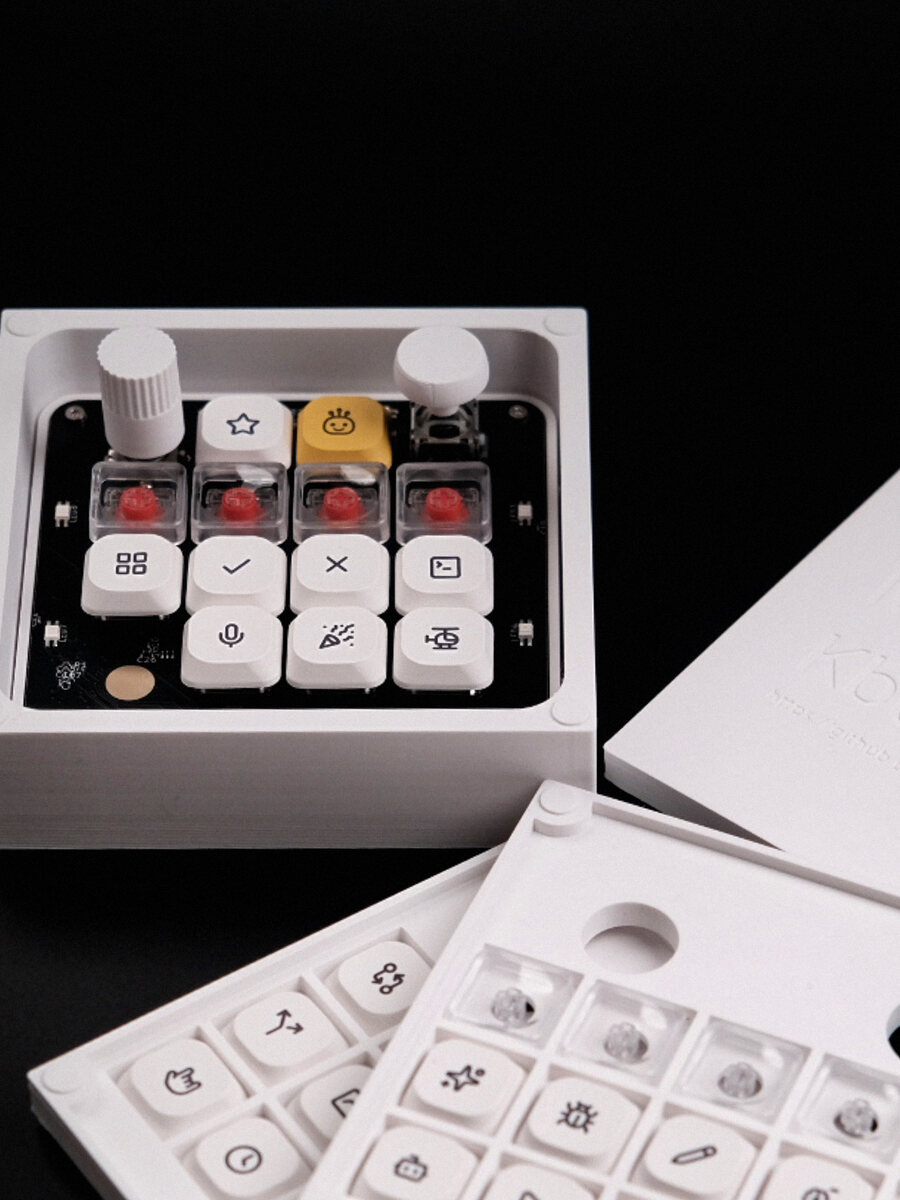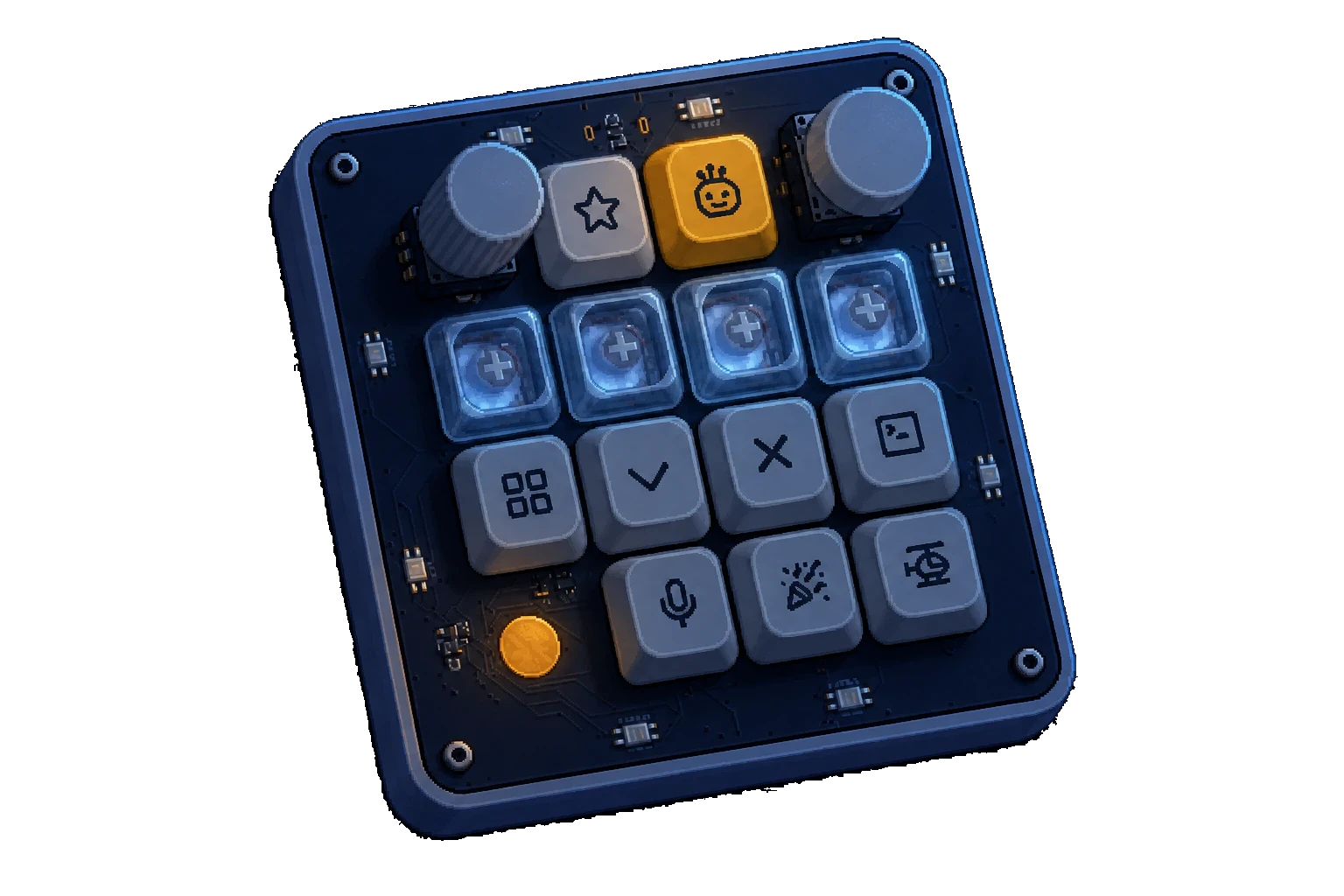
THE RIVAL
Codex Micro Keyboard
$230
- Closed hardware
- Closed firmware
- Closed software
- Works only with Codex
- You buy it. You don't own it.
Nice keycaps. Locked doors.
OPEN HARDWARE · OPEN FIRMWARE · OPEN SOFTWARE
▮ PRESS START
The open-source keyboard built around your needs.
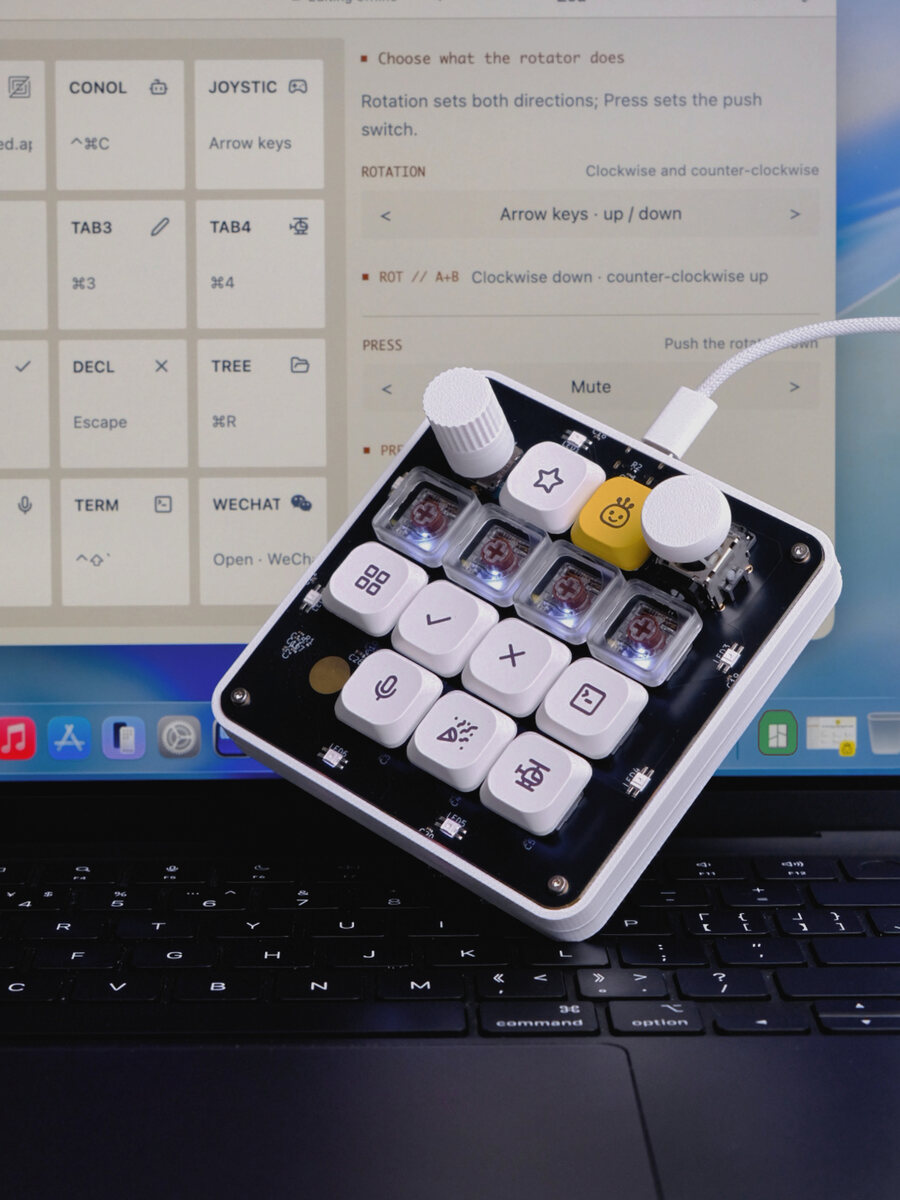
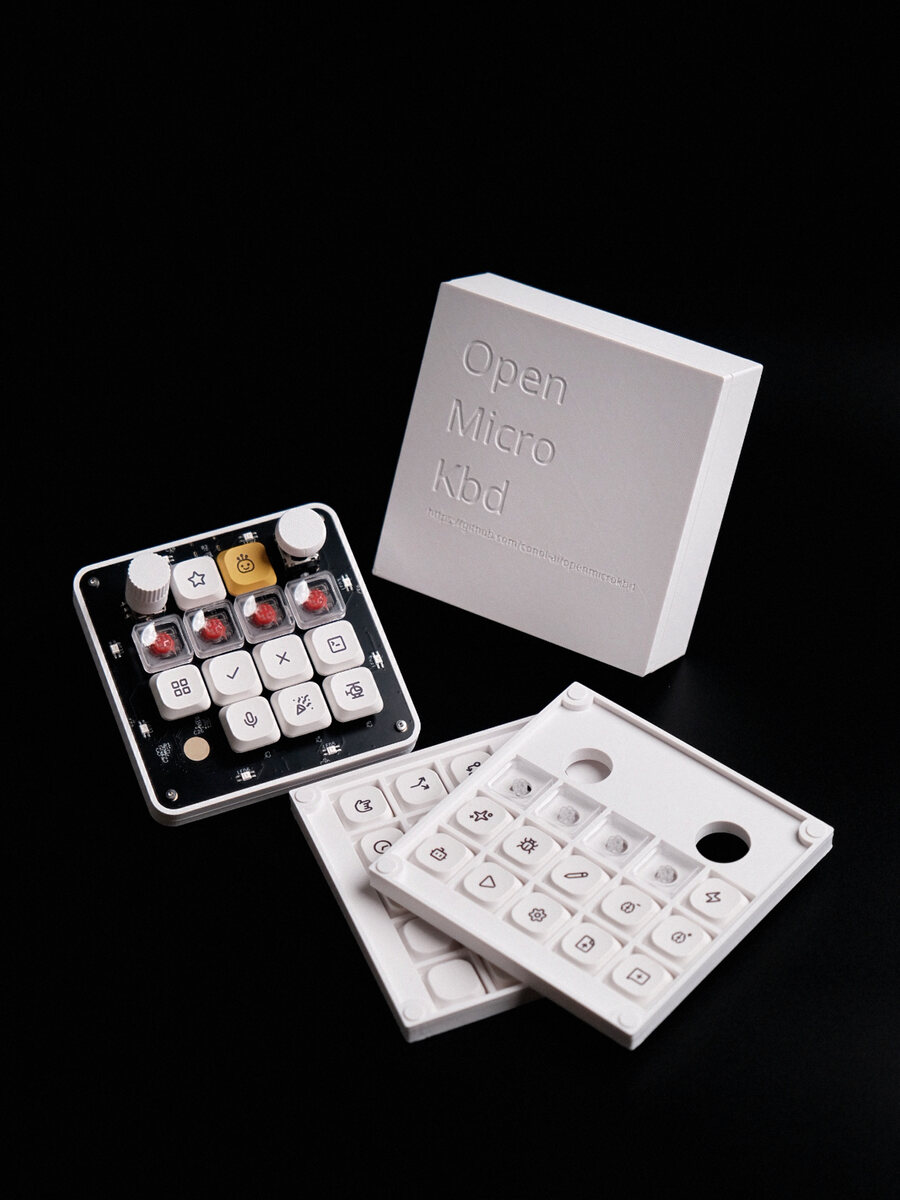
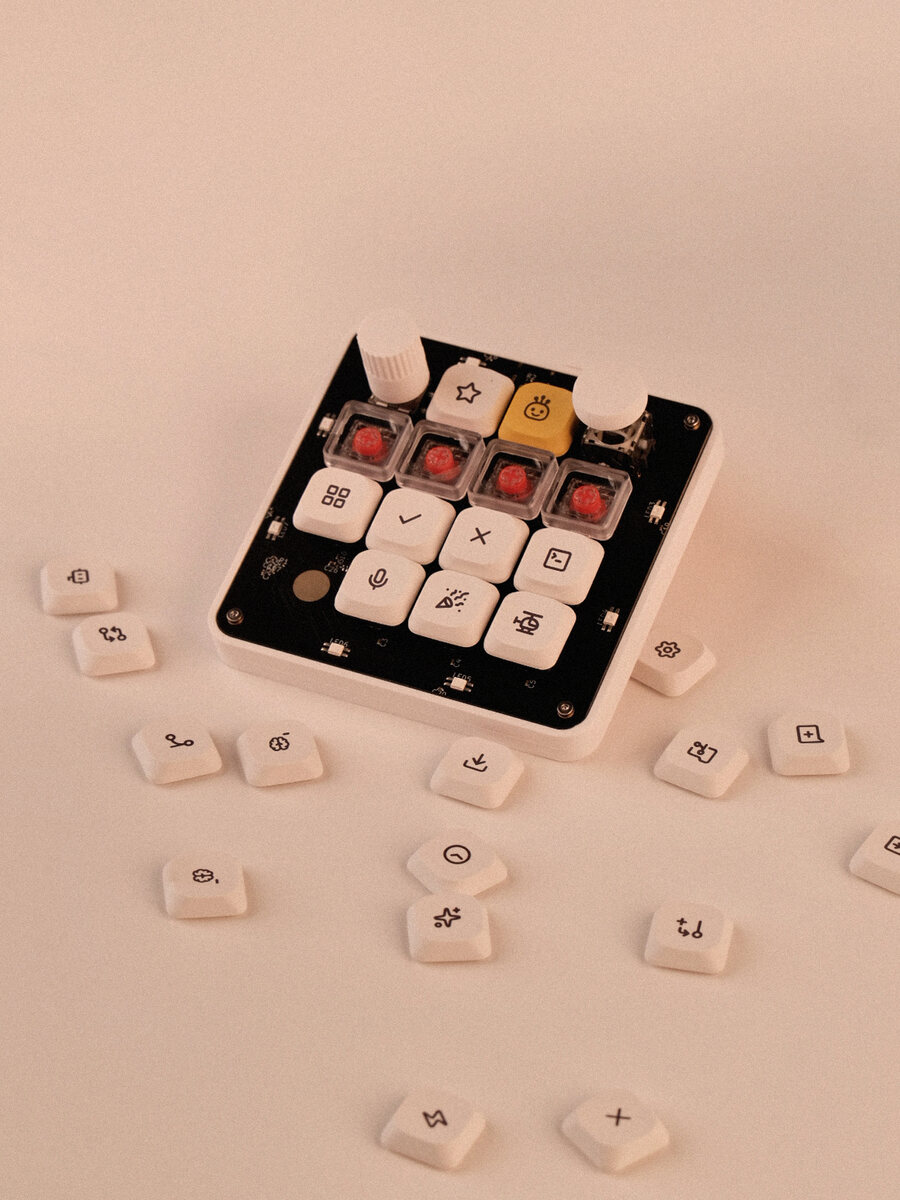
Thirteen keys, a knob, a stick, a touch pad. Zero locked doors. Everything you need to command your agents — for less than forty dollars.
For macOS · Windows · Linux
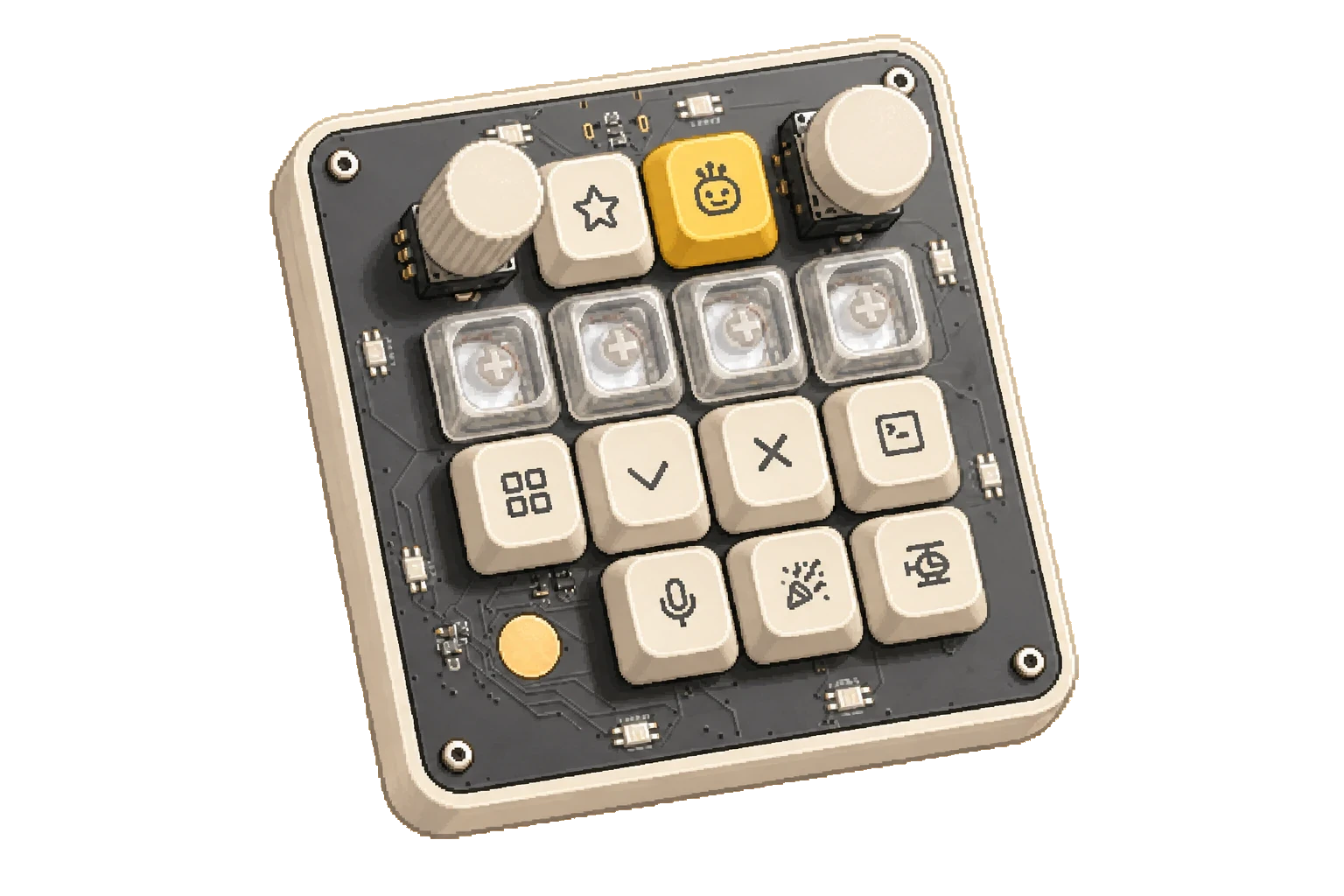
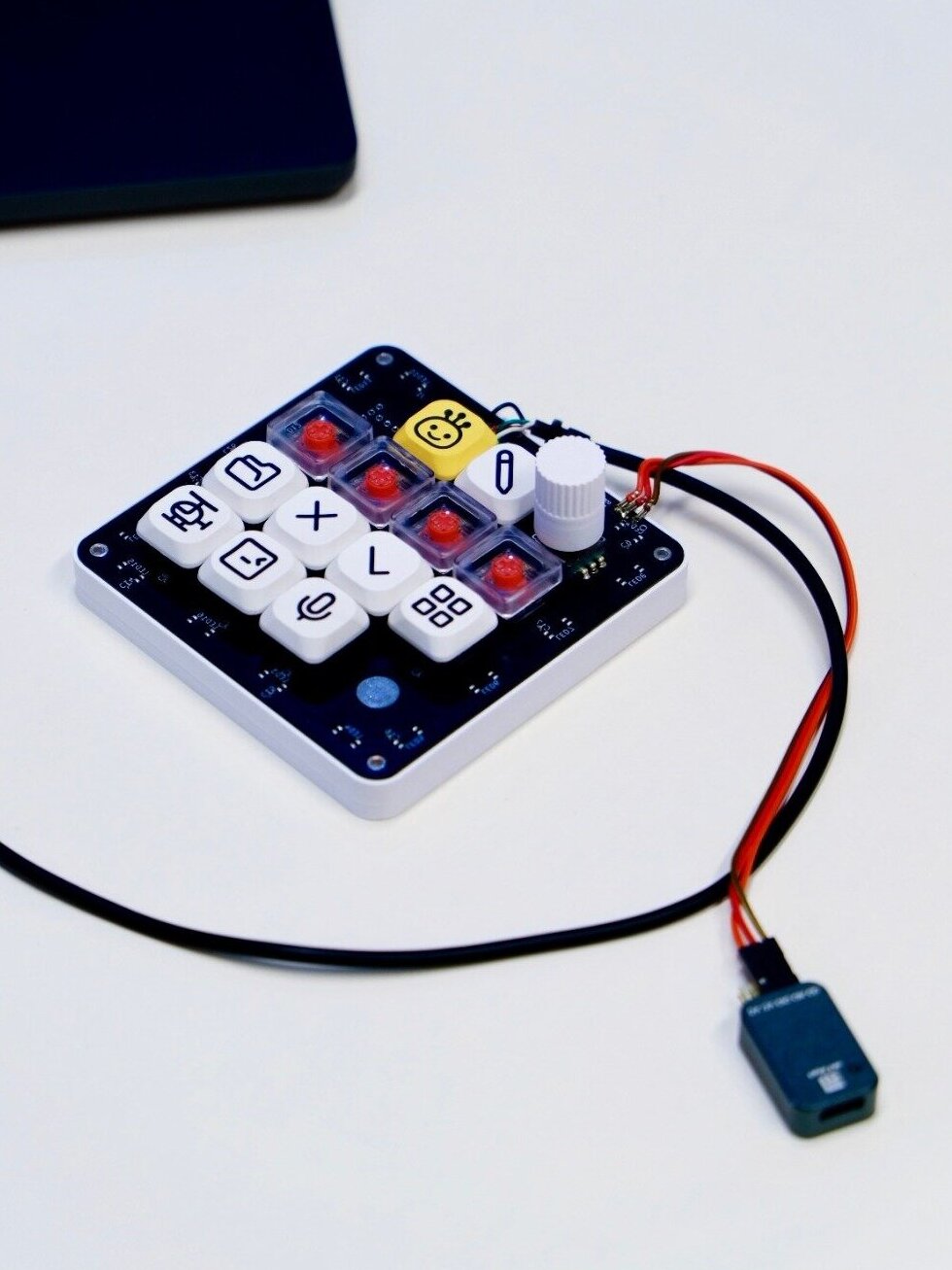
Hardware open. Firmware open. Software open. Under forty dollars. The PCB is written, not drawn. A blueprint anyone can replicate.
ROLL THE TAPE
The whole story, from a locked keyboard to a board you can compile.
Prefer it on YouTube? Watch it there.
CHAPTER I
A company that built its name on open research shipped a keyboard you can't open. So we drew the blueprint instead.
$230
Nice keycaps. Locked doors.
< $40
A blueprint anyone can replicate.
CHAPTER II
Start with the stick nobody expects. Then six more ideas across thirteen keys and one knob — every one of them remappable.
An analog joystick where you'd least expect one. Glide the mouse pointer, send arrow keys — or grade DaVinci Resolve color wheels by feel. Push it and see.
Pointer rests. Deflect to glide it.
Push-to-talk prompting. Hold the key, speak your mind, release — the whole prompt lands transcribed in one go. Typeless prompting for AI agents.
Turn it to dial reasoning effort — quick answers on the left, deep thinking on the right. Not talking to an agent? It's a volume wheel.
Assign a key to each running task. Tap to jump between them while the work keeps churning in the background. Your agents never wait on you.
When an agent stops to ask for permission, one press pulls up exactly what needs your attention. No more hunting through terminals.
Every repeated ritual of your day — the same five commands, the same paste, the same push — compressed into a single satisfying click.
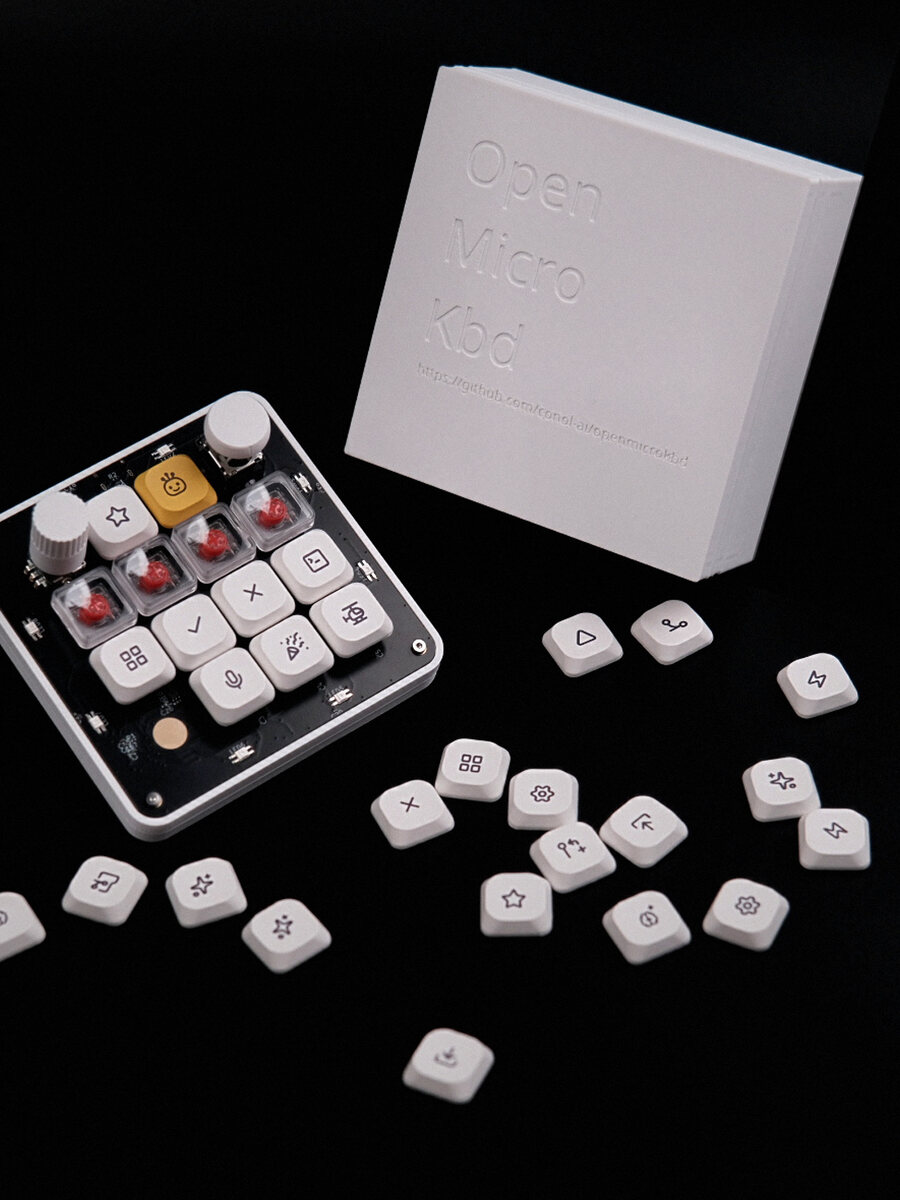
Keys, knob, stick, pad — 24 keymap slots, every one remappable in the config app. Changes land live and persist on the board. Build profiles and flip between them instantly.
CHAPTER III
A working replica of the real layout, right here in the page. Click the keys — or use your real keyboard: 1–6 and Q–U. Drag or scroll the knob, flick the stick, tap the pad.
13 keys · encoder · joystick · touch pad · 21 RGB LEDs · black PCB
Press a key to begin.
Six of these thirteen keys are mapped for this demo.
The rest — and the stick, and the pad — are yours.
VOICE KEY · PUSH TO TALK
LISTENING…
▮
THE KNOB · REASONING EFFORT
BALANCED
Turn the knob. Not talking to an agent? Same wheel, now it's volume.
THE STICK · MOUSE MODE
Proportional pointer glide — the push switch is left click. Press the stick to cycle modes.
TOUCH PAD · TAP
TAP
Tap to trigger anything. Two swipe slots are already reserved in the protocol for a future multi-zone pad.
MULTI-TASK KEYS · 3 RUNNING
Tap again to switch. Work continues in the background.
PERMISSION KEY
AGENT REQUESTS PERMISSION
$ rm -rf ./build && npm run deploy
Allow?
One press brings up exactly what needs your attention.
MACRO KEY · "SHIP IT"
Five steps. One press.
PROFILES · TAP TO CYCLE
CODE
13 keys remapped. Same hardware, different life.
UNASSIGNED SLOT
— — —
Open the config app and make it whatever you need.
What it becomes is entirely up to you.
THE HAPPY KEY
:)
Not every key needs a purpose. This one just makes us smile.
CHAPTER IV
No handshake with a single vendor. If it takes keystrokes, it takes Open Micro Kbd.
AGENTS
AND EVERYTHING ELSE
What it becomes is entirely up to you.
CHAPTER V
Not a product you wait for — a repository you clone. The schematic is source code in open-source CoHDL, and the compiler checks it. Gerbers, firmware, config app: all of it, in the open.
A blueprint anyone can replicate — compile it, solder it, flash it, fork it. Under $40 in parts, and no permission required.
CoHDL is open source. The language and compiler behind this schematic are public at cohdl.org, with source on GitHub.
The config app runs on macOS, Windows, and Linux. Every release ships notarized macOS disk images — Apple Silicon and Intel — and portable Windows ZIPs — Arm64 and x64 — next to the firmware binaries; Linux builds from source out of app/.
CHAPTER VI
Pixel art is fun. Here's the one on our desk — tap the stack, swipe it, or use the arrows.
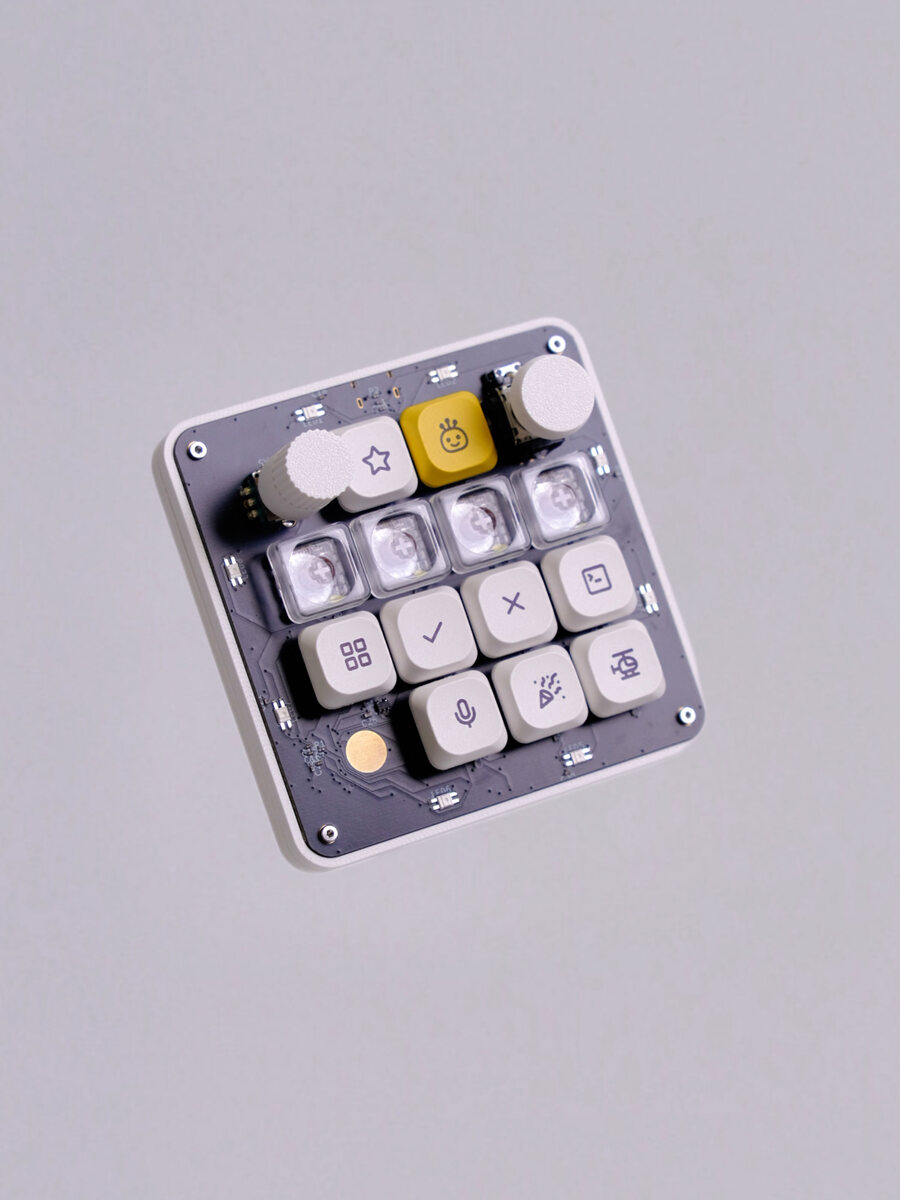
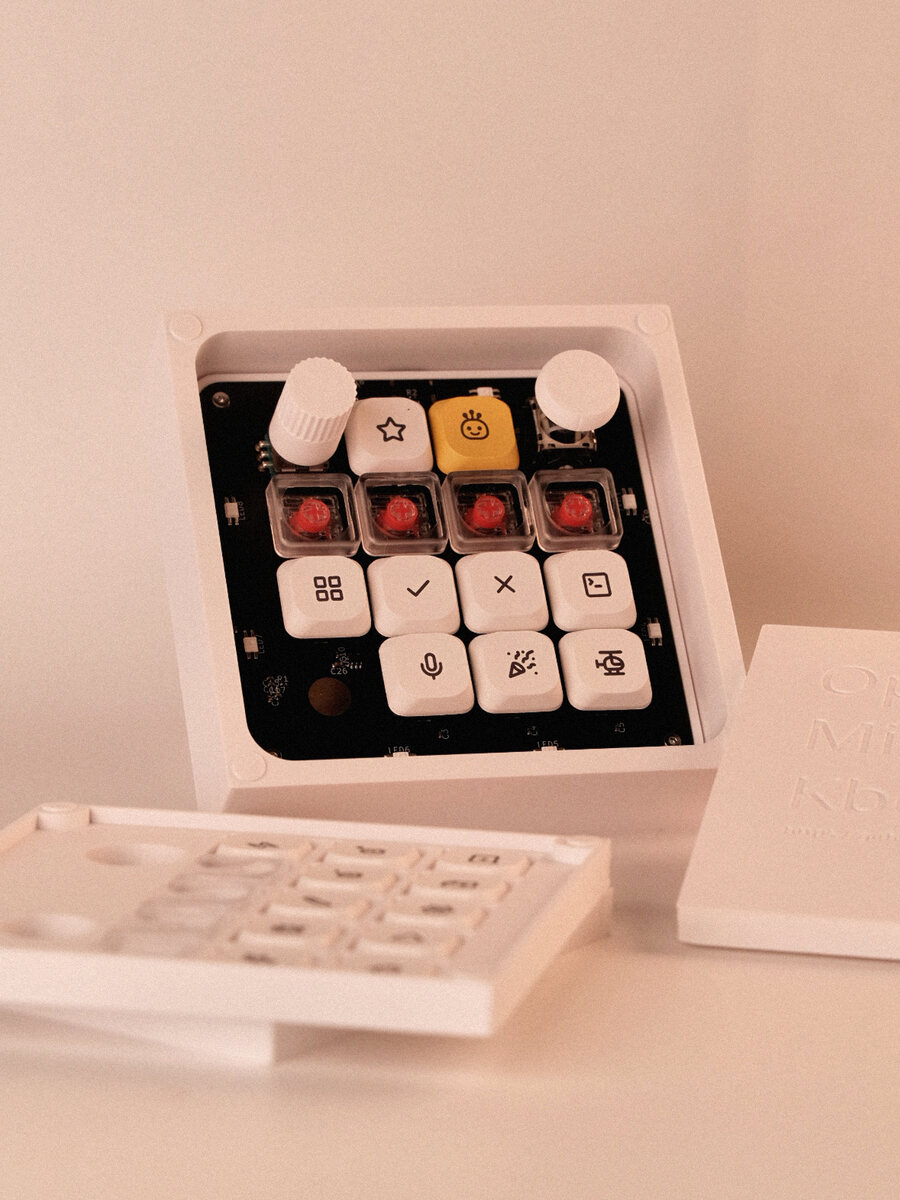
hw/v1/mechanical/.